The Wingfield family’s economic insecurity
The Glass MenagerieThe Wingfield family’s economic insecurity is the material pressure beneath its arguments about work, duty, and escape. Tom’s warehouse wages help sustain the household, but his job confines him; Laura’s unsuccessful attempt at business college leaves her without a career; and Amanda fears that, without marriage or employment, her daughter will remain dependent. In a household where even the light bill competes with Tom’s plans, economic need is not background alone: it defines what each person believes can be done next.
A Household Under Pressure
The family’s financial strain belongs to the larger social setting Tom establishes. He places the play in the 1930s, describing a dissolving economy that has left people struggling to recognize the world around them. He compares that confusion in the United States with revolution in Spain and the destruction of Guernica, then points to labor disturbances in American cities including Chicago and St. Louis. This context does not erase the Wingfields’ particular circumstances; it gives them a place within a period of widespread economic dislocation.
At home, the immediate burden is visible in Amanda’s question about what she and Laura will do for the rest of their lives. With Laura’s business career abandoned, Amanda imagines unmarried women reduced to living on relatives’ reluctant support, moved between small rooms and family households. Her fear is concrete: without a position of her own or a marriage that provides a home, Laura could face lifelong dependency. Amanda’s grim alternatives—work or marriage, and the possibility of neither—show how thin the family’s margin for error feels.
Work, Wages, and the Cost of Leaving
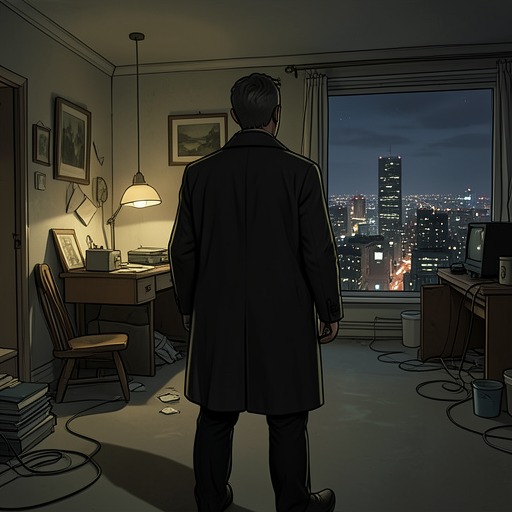
Tom’s job at Continental Shoemakers supplies income but gives him little sense of a future. He says that for sixty-five dollars a month he gives up what he dreams of doing and becoming. The warehouse’s interior and daily routine are, for him, not merely unpleasant conditions: they stand for the years he expects to lose if he remains. Yet his wages are tied to the family’s security, and Amanda invokes the risk to all of them when she challenges his decision to jeopardize his job.
His anger does not resolve the conflict between personal freedom and material obligation. Tom points to his father’s photograph as the example of a man who left, insisting that if he thought only of himself he would already be gone. At the same time, Amanda makes Laura’s future the condition of his departure: he may go wherever he wishes once Laura has someone to care for her and a home of her own. Her demand turns Tom’s earning role into a family obligation that has no clear end until Laura’s economic dependence is settled.
Laura’s Prospects and Amanda’s Plan
Laura’s failed vocational training sharpens Amanda’s anxiety. Amanda recalls paying fifty dollars in tuition and investing hopes and plans in her daughter’s education, only to learn that Laura became overwhelmed during a speed test and stopped attending. Amanda describes the money and future she had imagined as lost. Laura’s failure therefore has two consequences in the household: it leaves Laura without the business career intended to make her self-supporting, and it deepens Amanda’s fear that there is no practical alternative to dependency.
Amanda turns to marriage as a possible safeguard, not simply as a romantic hope. She stresses that Laura is two years older than Tom and has no clear direction, and says plans must be made for her. When Tom argues that Laura is a home-oriented person, Amanda rejects the idea that this can be a secure life unless the home is Laura’s, with a husband. Her insistence that Tom wait to leave until Laura is married and independent connects the family’s gender expectations directly to its financial predicament: marriage is imagined as a route out of dependence where paid work has failed.
The proposed gentleman caller also brings the economic stakes into the household’s routines. Amanda treats the visit as an occasion requiring polished wedding silver, laundered monogrammed linen, clean windows, new curtains, and suitable clothes. She explains that Laura has never before received a young man as a caller, making the visit feel like a rare chance that must be presented well. Later, she names the new floor lamp, rug, and clothes as expenses made for the evening, and resents that the visitor proves to be another girl’s fiancé. The preparation consumes resources the family cannot easily spare, while its hoped-for benefit—security for Laura—does not materialize.
Bills, Sacrifice, and the Limits of Escape
Tom’s attempt to act on his own plans exposes the household’s precarious arithmetic. He tells Jim that he paid his dues to the Union of Merchant Seamen instead of the light bill, adding that he will not be there when the lights are turned off. The choice gives material form to his intention to leave: money that might have kept the household’s service paid is redirected toward a future outside it. When Amanda asks about the overdue bill she had handed him days before, the conflict is no longer abstract. Tom’s freedom and the family’s basic expenses have collided in one unpaid account.
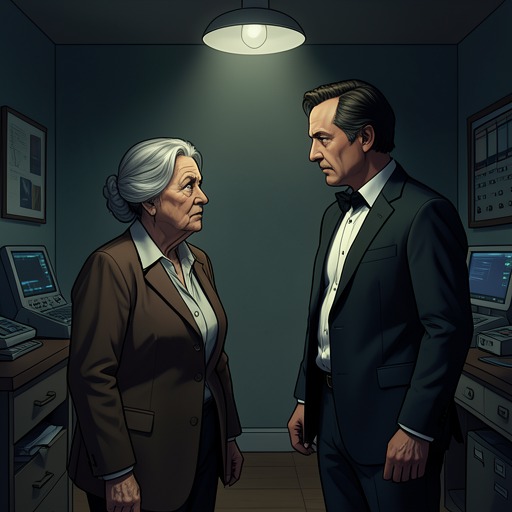
The later argument after Laura’s evening with the caller gathers these pressures into a final accusation. Amanda points to the effort, preparations, and expense—including the lamp, rug, and clothes—and says the family has made fools of itself entertaining another girl’s fiancé. She calls herself a deserted mother and Laura an unmarried sister without a job, then tells Tom to leave. Tom responds that the more she calls him selfish, the sooner he will go, and clarifies that he will not go to the movies. The exchange does not solve the family’s insecurity; it shows how economic duty and the desire to escape have become inseparable from blame.
Memory, Class, and the Present
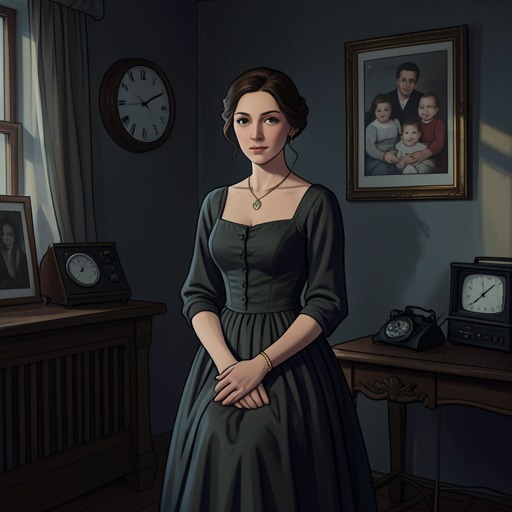
Amanda’s recollections of Blue Mountain offer a stark contrast to the family’s present circumstances. She tells Laura that one Sunday afternoon she received seventeen gentlemen callers, and remembers prominent young planters and sons of planters from the Mississippi Delta. Her stories include young men whose later fortunes or deaths she recounts in detail, along with the wealth left to widows in government bonds or acres of land. This remembered world makes Amanda’s former social standing vivid, but it is far removed from a household now dependent on Tom’s monthly wages and anxious over its bills.
The contrast helps explain why Amanda’s nostalgia and her practical planning coexist. She remembers a past in which callers and family connections seemed abundant, then tries to make a single caller into a possible answer to Laura’s future. But the family’s present offers no comparable cushion: Laura has no established income, Tom’s job is both indispensable and intolerable to him, and even an attempt to stage a hopeful evening costs money. Economic insecurity thus links the play’s public history to its intimate conflicts, while exposing the distance between Amanda’s remembered abundance and the Wingfields’ narrow choices.